

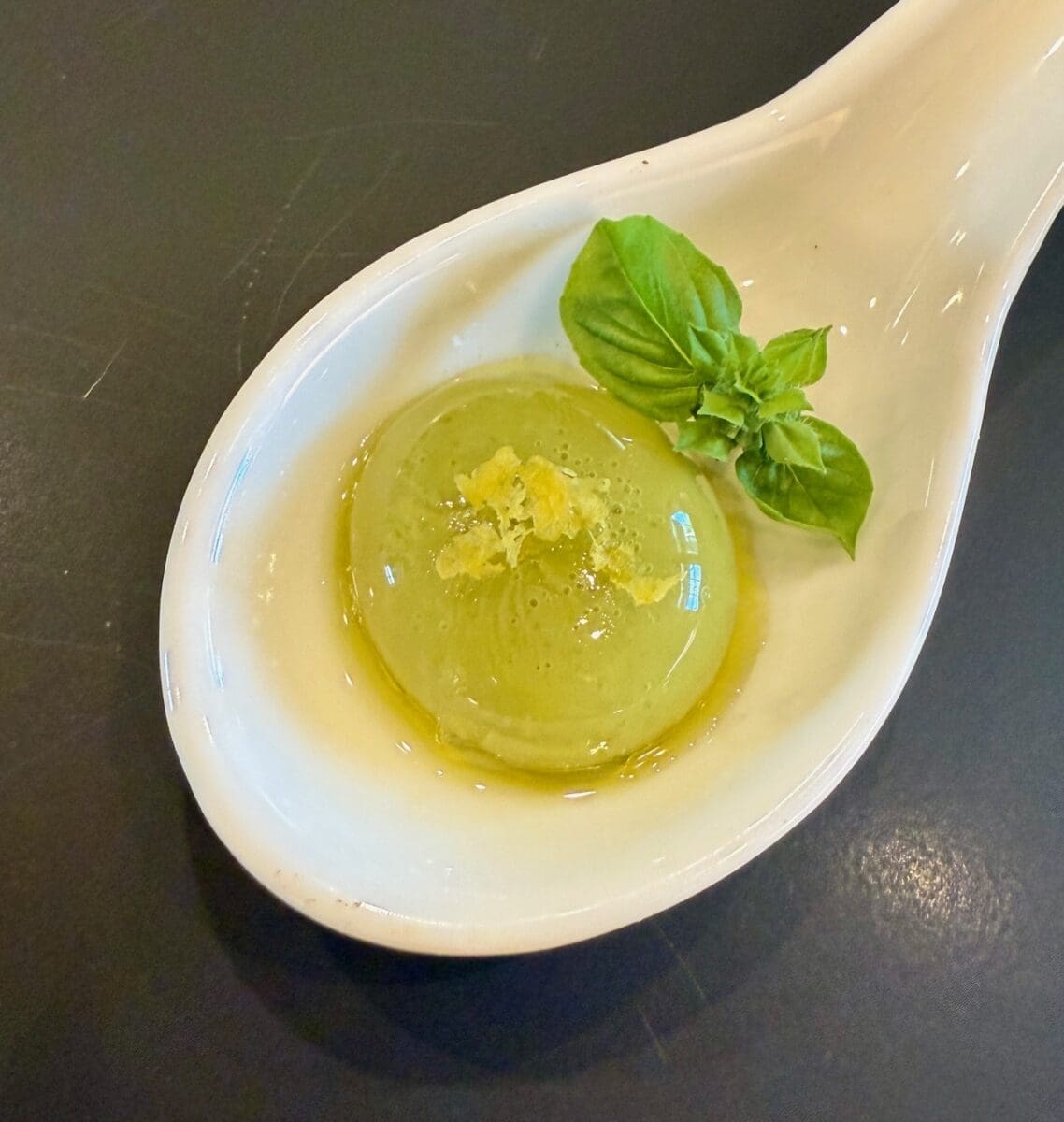
Few dishes have reshaped the culinary landscape quite like Liquid Olives, first created in 2005 by Ferran and Albert Adrià at the legendary restaurant el Bulli. Using the technique of reverse spherification, they transformed humble olive juice into a delicate sphere that bursts in the mouth with pure, concentrated flavor. This one bite not only reimagined what an olive could be, but also heralded the dawn of molecular gastronomy, a movement that challenged the boundaries of tradition and science in cooking.
Though spherification was patented in 1942 by food scientist William Peschardt of Unilever, it was the Adrià brothers who elevated it into art. Their invention inspired chefs across the globe—José Andrés in particular, who brought Liquid Olives to the United States as a tribute to his mentors. Alongside innovators like Britain’s Heston Blumenthal, famed for liquid nitrogen wizardry, and Chicago’s Grant Achatz with edible helium balloons, this dish became a symbol of culinary imagination.
I first encountered liquid olives at José Andrés’ Jaleo in Washington, DC, and was instantly captivated by the playfulness, elegance, and unforgettable flavor packed into a single bite. What follows is my homage to the Adrià brothers, to Andrés, and to the spirit of innovation they represent.
Making Liquid Olives
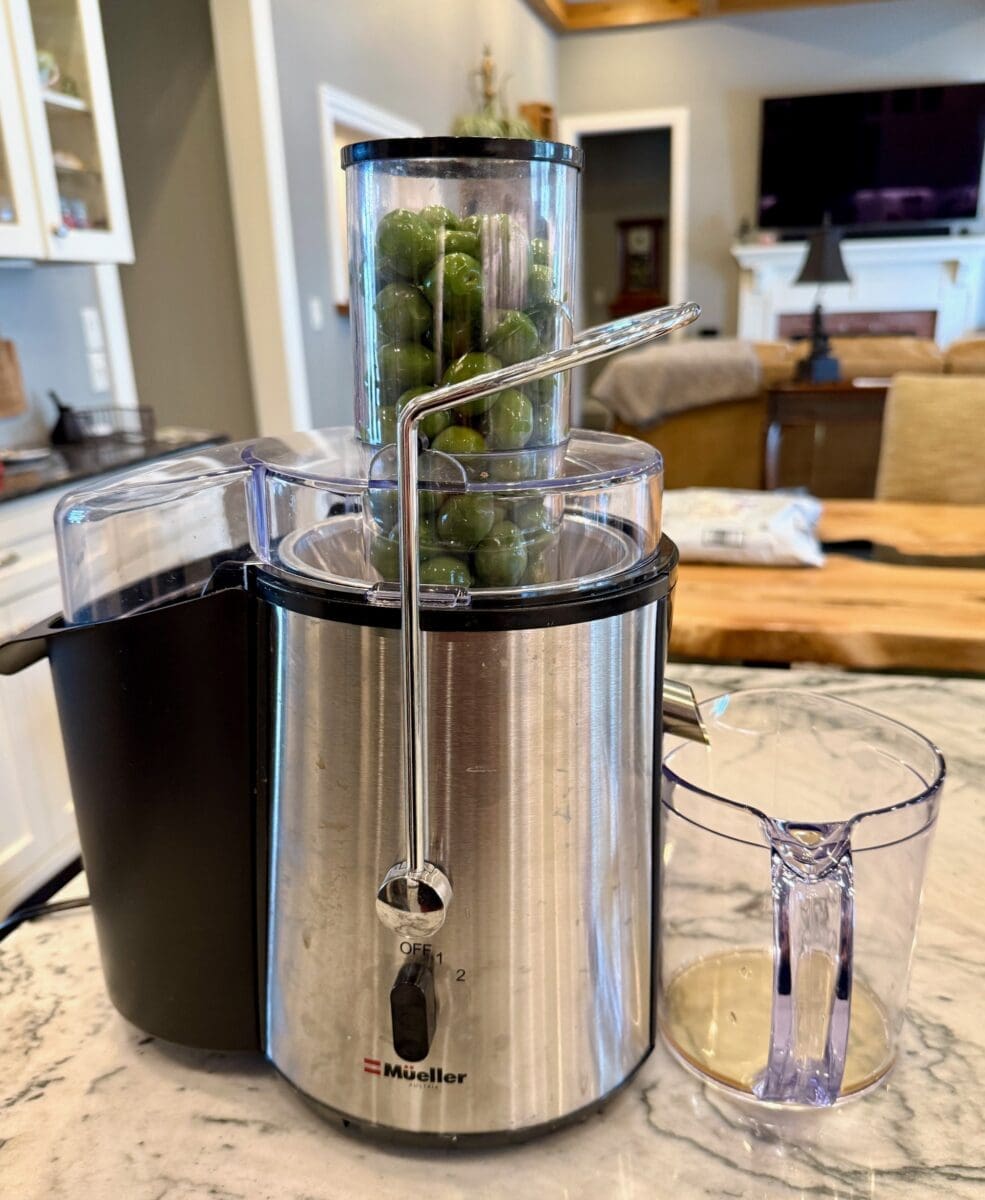
Strain and discard the brine, then juice the olives. After juicing, combine it with the calcium lactate glutonate and xanthan gum, then refrigerate overnight to let the bubbles dissipate.
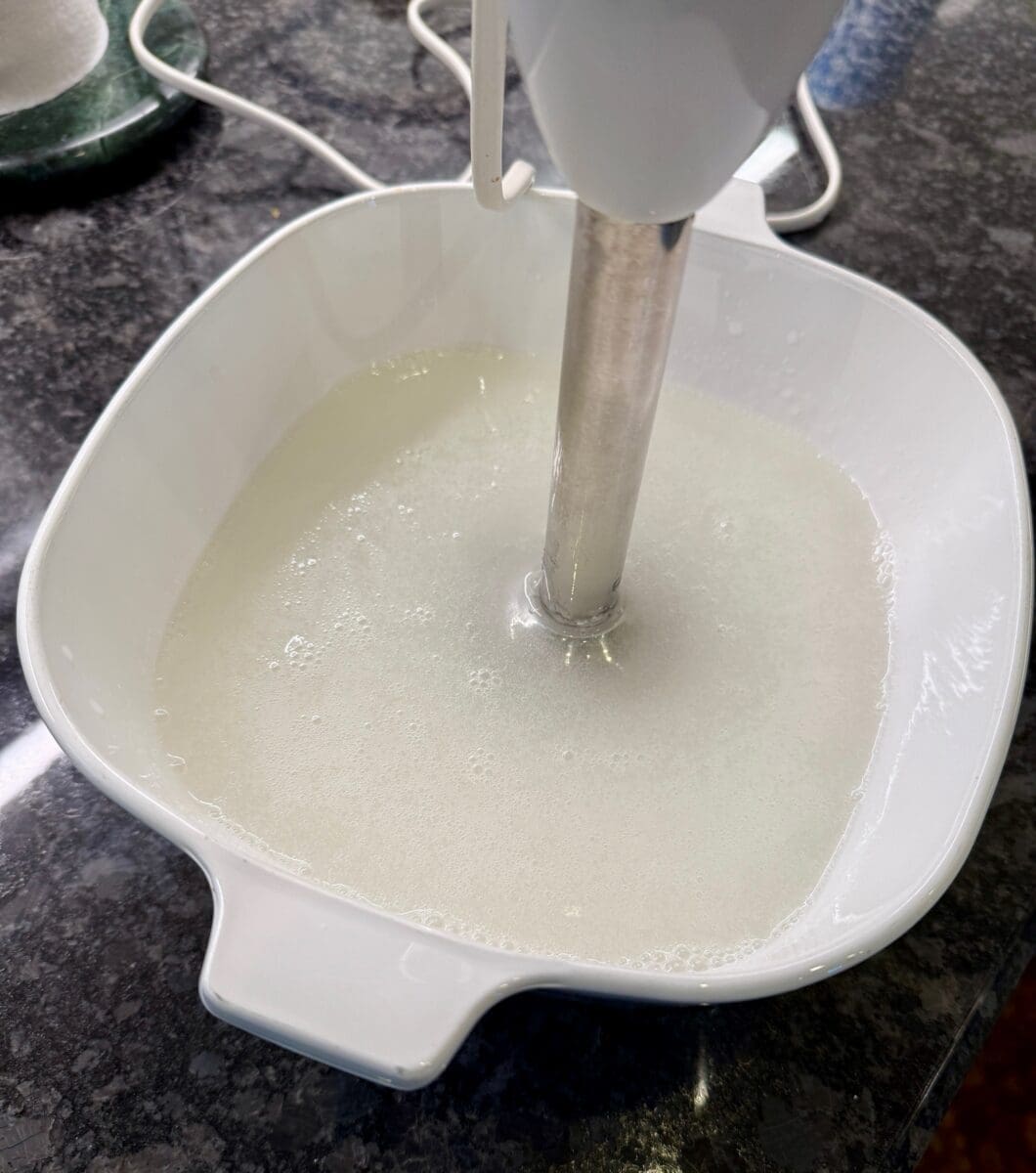
Create the sodium alginate bath with distilled water bath using an immersion blender. Let it rest in the refrigerator overnight to let the bubbles escape.
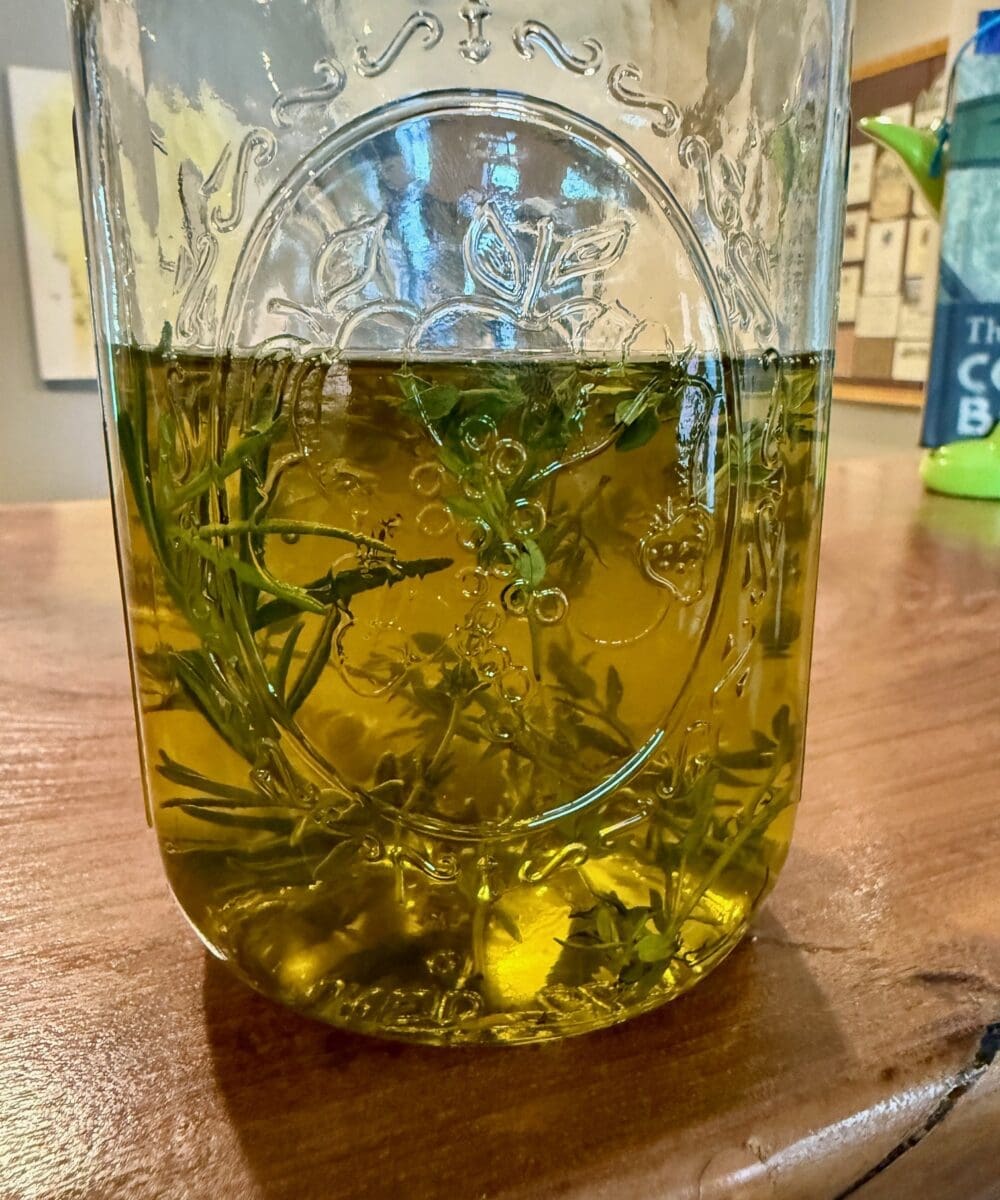
Infuse the olive oil and rest it in a cool, dark place.
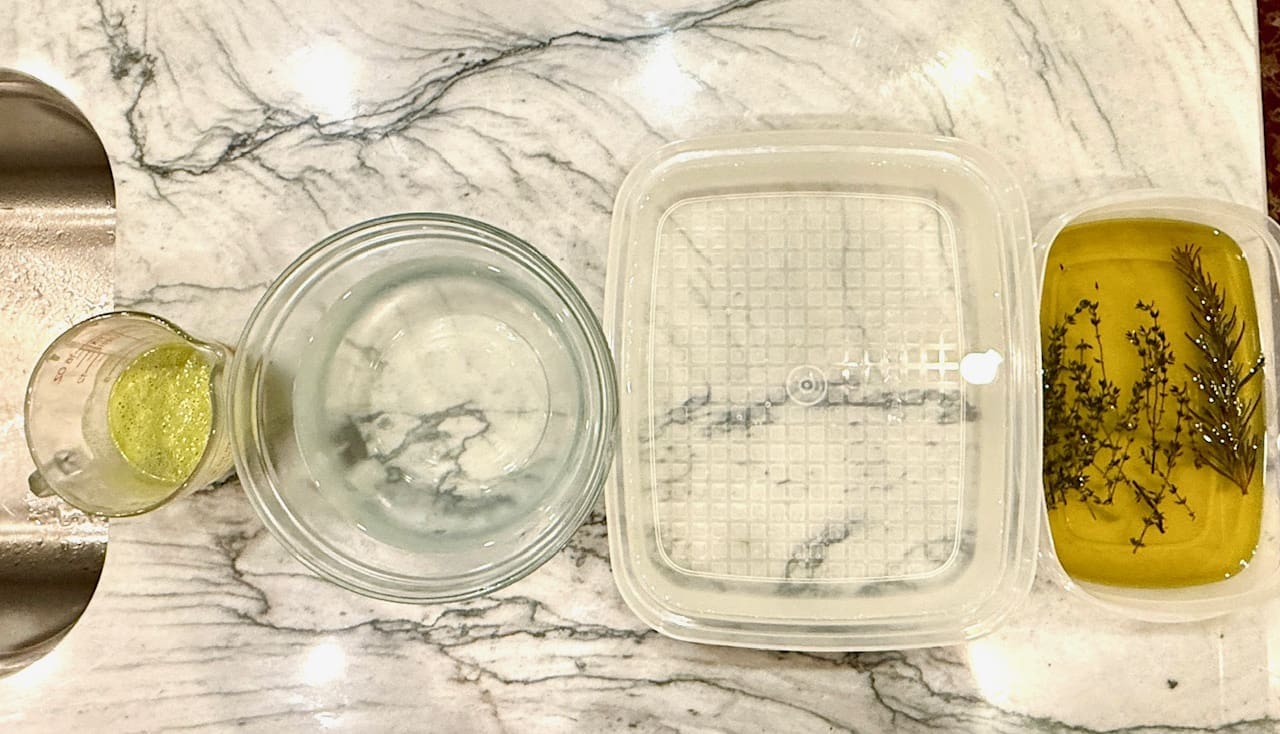
Prepare your workspace with the olive juice mixture on the left, then the sodium alginate bath, clean water rinse and herb infused olive oil.
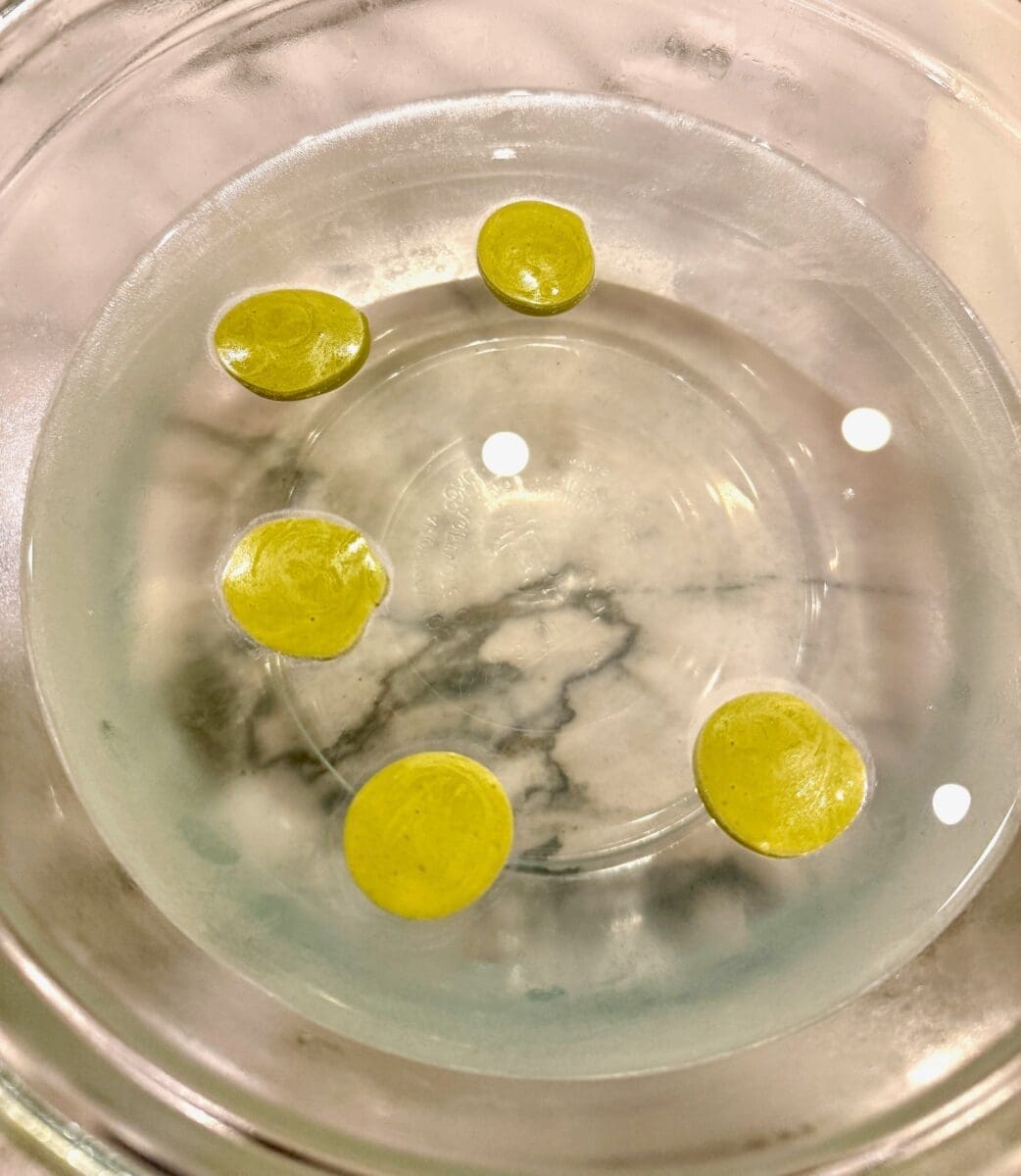
Use the 5ml spoon to place 5 scoops into the alginate bath in a clockwise arc, wiping the bottom of the teaspoon after each one to prevent drips. Place them far enough apart to prevent them sticking together. Start your timer when you place the first one. When all 5 are in, gently press each one down in order far enough to cover the tops in the bath to ensure they “cook” through. After the first has been “cooking” for 2-1/2 minutes remove it with the slotted spoon, dip and gently rinse in the clean water bath and gently place it in the infused olive oil. Rinse your slotted spoon under running water and wipe with a paper towel and proceed with another liquid olive until all five are processed.
Repeat until you have used all the olive mixture. Cover and keep in a cool place until ready to serve the same day, or refrigerate overnight.
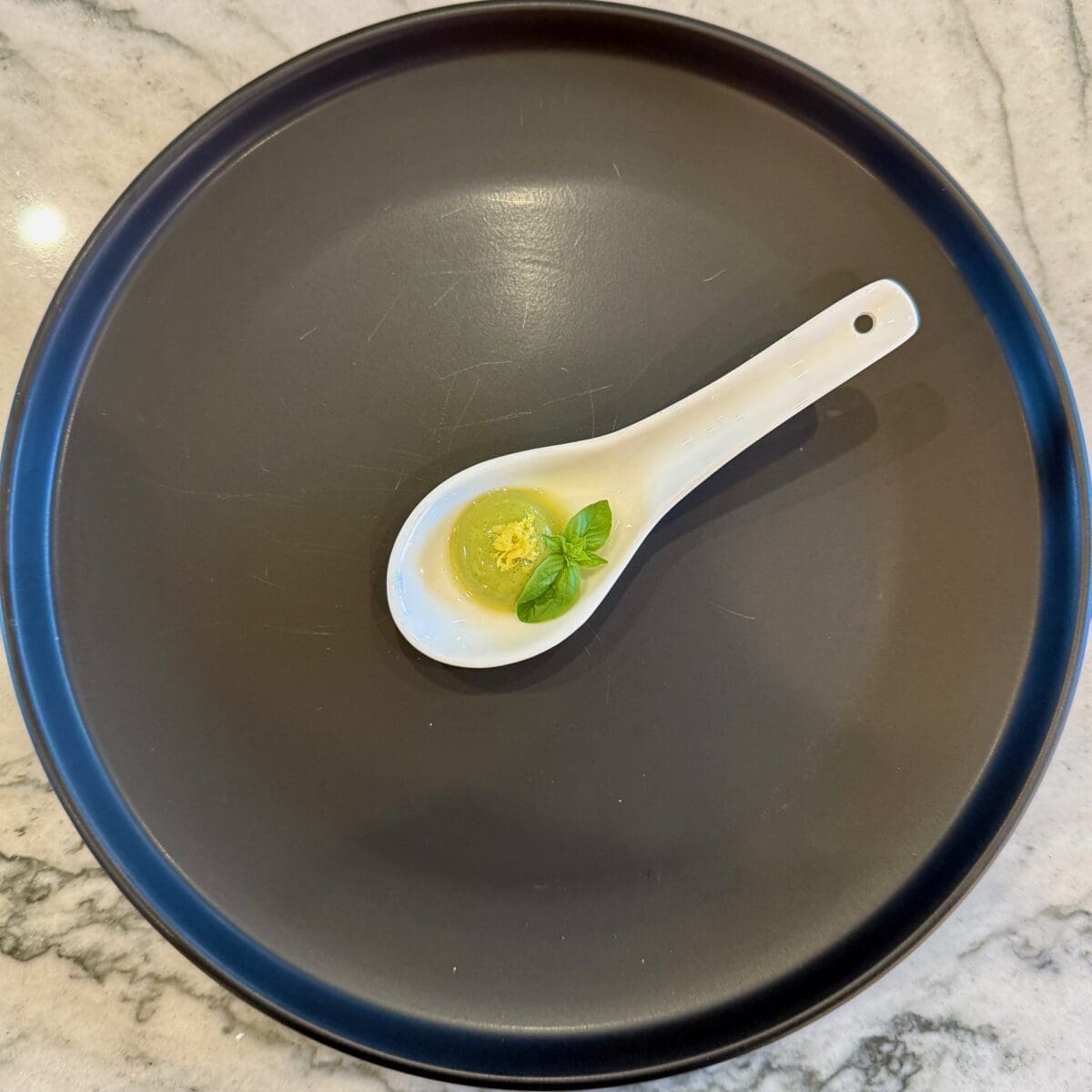
Plate the olive on a Chinese soup spoon and garnish with lemon zest and a fresh basil sprig.
Liquid Olives
Spherified olive juice encapsulated in a gel membrane and preserved with herb infused olive oil
- Prep Time: 30
- Cook Time: 30
- Total Time: 1 hour
- Yield: 30-35 1x
Ingredients
Spherical Olive Ingredients Makes 30-35
- 8 oz of olive juice – (5) 8 oz jars of Mezetta Castelvetrano Olives in mild brine will yield about 8 oz of juice when processed through a juicer
- 6–0.7g xanthan gum powder
- 2 g (1%) calcium lactate gluconate
- Lemon zest – garnish – tiny bit on top of each olive
- Basil leaf garnish – optional
Alginate Bath – Use a flat-bottom pan
- 35 oz distilled water
- 5 g sodium alginate
Infused Olive Oil
- 16 oz Extra virgin olive oil+
- 5–6 fresh thyme sprigs
- 1 large fresh rosemary sprig
- 3 large garlic cloves – crushed
- 1/4 tsp black peppercorns
Instructions
DAY 1 – Preparation
- Prepare the Alginate Bath: Mix the sodium alginate in the distilled water using an immersion blender until the sodium alginate is completely dissolved – about 3-4 minutes. Refrigerate and let it rest for 24 hours so that the air that has entered the mixture disappears and the sodium alginate is completely rehydrated
- Prepare the Olive Juice: Strain if using olives packed in brine. Use a juicer to extract the juice from the olives
- Combine the olive juice, calcium lactate glutonate and xanthan gum: Stir together the calcium lactate gluconate with the olive juice, then mix in the xanthan gum powder and leave it to hydrate for 1 minute. Mix with an immersion blender at medium speed and refrigerate for 10 minutes. Check the density of the olive juice. It should be like a thick sauce. If it is too liquid, add some Xanthan in small increments of 0.2 g and repeat the process. Refrigerate for 24 hours to allow air to escape the mixture
- Infuse the Olive Oil: Crush the garlic. Warm the olive oil in a pan over lowest heat, then add the garlic, herbs and peppercorns. Remove from heat, transfer to an airtight container and store in a cool dry place.
DAY 2 – Making the Liquid Olives
- Prepare a container with a flat bottom to store the liquid olives that will hold the infused olive oil and is deep enough to cover the olives. Fill it with the infused oil
- Prepare a large cool water bath to rinse the liquid olives after they have “cooked” in the alginate bath and have both a slotted spoon and 5ml teaspoon at the ready, with a few paper towels next to a running faucet.
- Make the Liquid Olives: Remove the alginate bath and the refrigerated olive juice from the fridge. Scoop the olive mixture with a half sphere 5ml measure spoon and carefully pour it into the alginate bath in batches of 5-6 to control the “cook” time. Don’t let the liquid olives touch in the bath because they will stick together. Let the olives “cook” submerged for about 2½ minutes in the alginate bath and then carefully remove one at a time using a slotted spoon. Rinse them gently in the water bath, drain and transfer them to the storage container with olive oil and keep in a cool place until ready to serve.
- If they remain floating, gently push them under so the top will “cook”
- Wipe the outside of the sphere spoon between each use to prevent drips and do not let the spoon touch the alginate bath
- Rinse and wipe the slotted spoon with a paper towel after each sphere is placed in the olive oil
- If they fall to the bottom, periodically stir to gently move them so the bottoms get more contact with the bath
SERVING
Serve on appetizer spoons or Chinese soup spoons with lemon zest and basil garnish
Notes
Best same day or day after. The membrane continues to cure and thicken as they set